




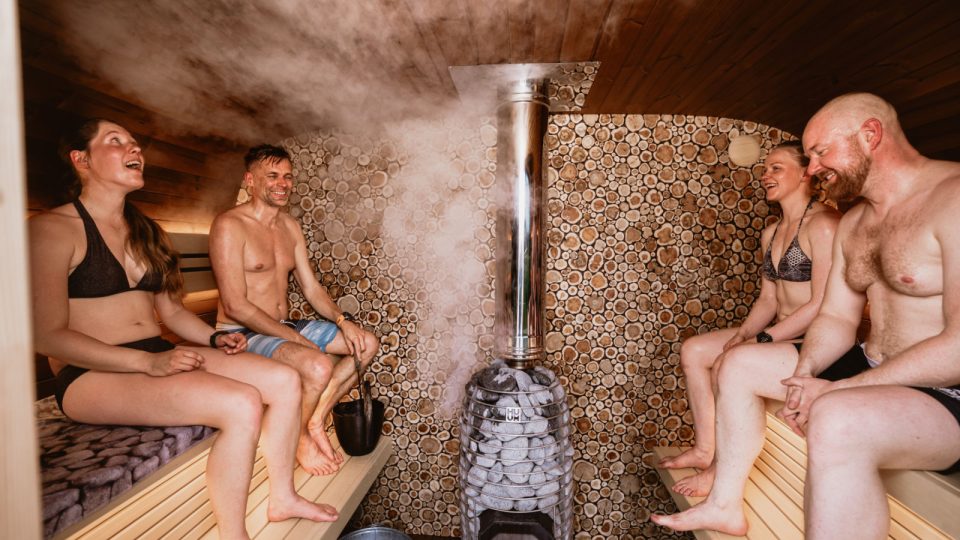
You have just finished a brutal long run, your legs are heavy, and the gym has both a sauna and a steam room glowing in the corner. Which one actually helps you recover and run faster? Pick the wrong one, and you’re just sweating for no reason.
The sauna vs steam room question matters more for runners than most people assume, and the answer comes down to how your body handles heat.
Table of Contents
The Core Difference: Dry Heat vs Moist Heat
On paper, a sauna and a steam room look like the same thing: a hot box that makes you sweat. The real difference is the air itself. A traditional sauna heats dry air using a stove, hot stones, wood, or infrared panels, pushing temperatures to roughly 70-100°C while keeping humidity low, often between 10 and 20 %. A steam room works the opposite way. A generator floods the space with water vapour, so the temperature sits lower, around 40-50°C, but humidity climbs to nearly 100 %. That wall of moisture is why a 45°C steam room can feel hotter than an 80°C sauna.
That distinction is not just trivia. It changes how heat reaches your muscles. Clinical research from Loma Linda University found that moist heat penetrates deep tissue faster than dry heat, and in a study on exercise-induced soreness, moist heat applied for a quarter of the time was just as effective, if not more so, at easing pain and limiting muscle damage. For tired legs after a run, how quickly that warmth sinks in is the whole point.
A simple comparison helps put it in context. If you want the full picture, this guide to the differences between steam rooms and saunas breaks down how the two environments are built and what each one does best. The short version is in the table below.
| Feature | Sauna | Steam room |
| Heat source | Stove, hot stones, wood, or infrared | Steam generator |
| Temperature | ~70-100°C | ~40-50°C |
| Humidity | Low (10-20%) | Very high (close to 100%) |
| Air feel | Dry and sharp | Thick, warm, and wet |
| Built from | Wood (cedar, hemlock) | Tile, glass, stone, acrylic |
| Best known for | Heart health, circulation, endurance | Breathing, skin, gentle muscle relief |
Why Heat Helps Runners Recover
Before comparing the two, it helps to know why sitting in a hot room does anything at all. Heat makes your blood vessels widen, a process called vasodilation, which boosts circulation and sends more oxygen and nutrients to the muscles you just trashed on your run. Better blood flow helps clear metabolic waste, eases stiffness, and supports the repair of the tiny muscle fibres broken down during training.
Heat also triggers a relaxation response that lowers muscle tension and calms the nervous system, which is part of why a post-run sweat feels so good. Both the sauna and the steam room tap into this. They just deliver the heat in different ways, and that delivery is what tilts the benefits toward one or the other.
What a Sauna Does for Runners
This is where the sauna earns its reputation. The dry, intense heat does more than relax you. It nudges your body through some of the same adaptations you chase in training.
The most cited evidence for runners comes from a 2007 study on competitive male distance runners. After three weeks of sitting in a sauna for about 30 minutes immediately after training, the runners increased their time to exhaustion at 5K pace by 32 percent. The researchers traced the gain to a 7.1 % jump in plasma volume. More blood volume means more oxygen delivered to working muscles per heartbeat, the same mechanism that makes altitude training effective. They estimated it could translate to roughly a 1.9 % improvement in an endurance time trial, which is significant at the sharp end of a race.
The benefits stretch beyond performance. A decades-long Finnish study published in JAMA Internal Medicine tracked over 2,000 men for more than 20 years and linked frequent sauna bathing to lower blood pressure and a reduced risk of cardiovascular and all-cause mortality. For an endurance athlete whose whole sport runs on the cardiovascular system, that is a serious bonus sitting on top of the recovery feel-good factor.
A word of balance: most of this research uses dry, hot, Finnish-style saunas, not the milder steam room. If raw performance and heart health are your priorities, the sauna has more robust evidence behind it. Just remember the heat is a stressor in its own right, so it works best alongside the rest of a smart recovery plan rather than replacing it.
What a Steam Room Does for Runners
The steam room plays a softer game, and for some runners that is exactly what tired legs and lungs need.
The headline benefit is breathing. Warm, moisture-heavy air can loosen congestion, soothe irritated airways, and open up the sinuses, which is why steam is a long-standing home remedy for colds and mild respiratory niggles. If you run through winter or deal with exercise-related airway tightness, ten minutes in the steam can feel like a reset for your chest.
Then there is the moisture itself. That same deep-penetrating moist heat that helps with soreness also wraps around stiff joints and tight muscles in a gentler way than the sauna’s dry blast. Plenty of runners find the steam room less punishing to sit in, so they actually relax instead of counting down the seconds. The high humidity is also kinder to skin, leaving it hydrated rather than parched.
Where the steam room shines is recovery comfort and relaxation rather than hard performance numbers. Lower stress, easier breathing, and soothed muscles all support the body’s repair process, and pairing it with the basics turns a pleasant sweat into genuine recovery. If you want to build a proper routine around it, these recovery tips from experienced runners are a good starting point. It works best when used consistently after easier sessions.
Verdict: reach for the steam room when your priority is breathing easy, unwinding, and soothing stiffness without the harsh heat.
So, Which Should Runners Choose?
There is no universal winner. The right pick depends on what you want out of the session. Use this as a quick guide:
- Chasing performance or heart health: Go for the sauna. The endurance and cardiovascular evidence is strongest for dry heat.
- Recovering from a hard race or feeling beaten up: Either works, but the steam room is gentler if the sauna feels like too much.
- Fighting congestion, dry air, or winter chest tightness: The steam room and its moist air win comfortably.
- Short on time and want deep muscle warmth fast: Moist heat penetrates quicker, giving the steam room an edge for soreness.
- You simply hate one of them: Consistency beats theory. The heat session you actually look forward to is the one you will keep doing.
Plenty of runners do not choose at all. Alternating between the two, or using a sauna during performance blocks and a steam room on easy recovery days, lets you tap both sets of benefits.
How to Use Heat Safely After a Run
Heat is a stressor, and stacking it on top of a hard effort without thinking can leave you light-headed or dehydrated. A few simple rules keep it useful:
- Rehydrate first. You have already lost fluid and salt on the run. Drink before you sweat more, and keep water with you.
- Keep sessions sensible. Ten to twenty minutes is plenty for most runners. Step out if you feel dizzy or nauseous or if your heart is pounding.
- Wait if you are wiped out. Straight after a maximal effort, give your heart rate a chance to settle before adding heat.
- Cool down properly. A cool shower afterwards helps your body return to normal and feels great on tired legs.
- Skip it if you are unwell or have a heart condition you have not cleared with a doctor.
Heat therapy is one tool, not a shortcut. It works best layered on top of the fundamentals, so if you want the full system, this rundown of ways to recover faster after a race covers the habits that matter most. It can also leave you feeling more refreshed afterwards.
So, sauna or steam room? If you want measurable performance and heart-health gains, the dry heat of the sauna has the science on its side. If you want gentle recovery, easier breathing, and a more relaxing sweat, the steam room is your friend.
Most runners do not have to pick a side. Understanding what each one does lets you use heat with intent instead of just sitting in whatever is closest, and the best recovery is always the one you will actually keep doing.
