






How Does the IPPT New Scoring Work?
The scoring system of the revised IPPT works differently from its predecessor. Servicemen are allocated points for their performances in each of the 3 stations. NSmen can score up to 25 points for both the push up and sit up stations, with 50 points for the 2.4km station, for a maximum total of 100. To put it simply, the average NSMan needs a combined total score above 50 points (or above 60 if he is an active serviceman). How well you score for each station is dependent on your age. You can still fail a station (and the entire test) if you score a 0 points at any 1 of the 3 stations. That means at the very least, you must score 1 point for your age group if you want to have a chance at passing your IPPT test.
How Fast Should I Run for My 2.4km?
For clarity reasons, we’ve decided to settle on the timing for the 2.4km run at 12 minutes and 30 seconds. This is because it is an optimal “time to score” ratio, with an above-average score of 30 points for people below 22 years old, and even higher for older age groups. The timing of 12 minutes 30 seconds for the 2.4km is only a recommendation: if you are able to aim for a faster timing, please go ahead! Let’s put an example across: Meet NSMan A, who is 28 years old and is aiming for an IPPT Pass (With Incentive). That means he needs to score at least 61 points in total for all 3 stations of his IPPT. His age puts him in Age Group 4, and his 2.4km target timing of 12 minutes and 30 seconds will net him a score of 33 points for this station. NSMan A needs 28 more points in order to score an IPPT Pass (With Incentive), so he needs to accomplish 22 push ups (14 points) and 28 sit ups (another 14 points) for a total score of 61. In order to accomplish his target time of 12 minutes and 30 seconds for his 2.4km, NSMan A needs a pace of 5 minutes 12 seconds per km.Understanding the 2.4km distance from a Runner’s Perspective
Long slow runs are the foundations for endurance for any runner, but that’s not what the 2.4km is about. MINDEF’s passing standards mean that you have to run a moderately fast pace. This puts your cardiovascular system to the test, and you will be running at a brisk pace that will most certainly be faster than your usual long endurance runs. Of course, the 2.4km distance seems short in comparison to a 10km run or half, but running at a reasonably fast pace will still take a certain level of training to accomplish.It’s All About the Intervals!
Now that we’ve established the optimal pace of 12 minutes and 30 seconds for NSMan A’s 2.4km, how does he train for it? The answer: Interval runs that condition your body to run at a faster pace, yet remaining consistent throughout. Try to run on stadium tracks, which make it easier on your knees. As tracks go around in 400m laps, it will also be easier to track your progress. 6 laps round the track will be a 2.4km run!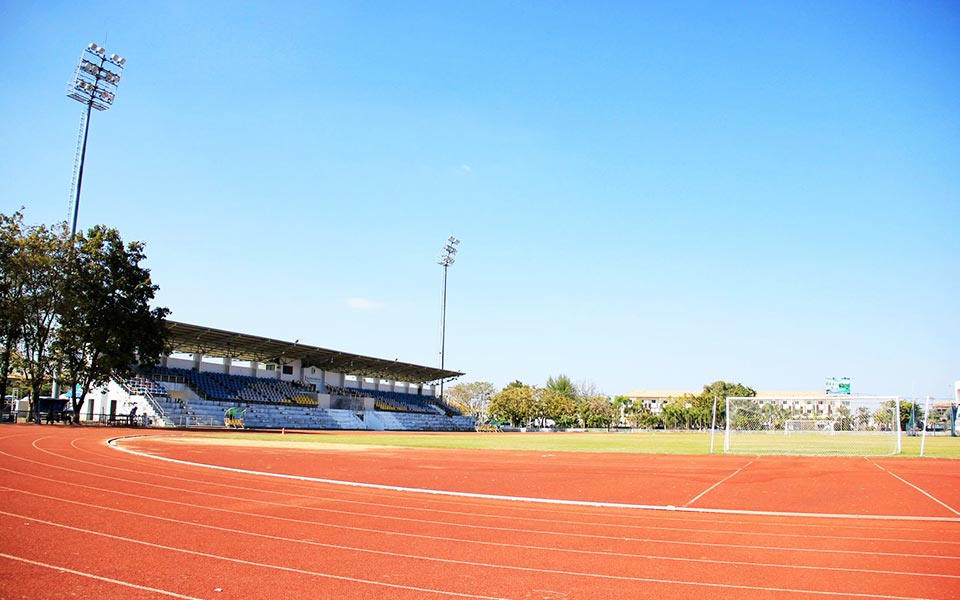
6x400m method
- Set a goal lap time according to your targeted 2.4km completion time.
- Run 400m at your goal lap time.
- Leisurely jog or brisk walk for 120 seconds.
- Repeat 5 more times.
The 125% Method
Another way is to trick your body into believing that 2.4km is not really a demanding distance at all. You do this by running slower, at 120% slower than race pace for an additional 600 metres on top of the 2.4km distance, for a total of 3km. This means NSMan A will run at approximately 6 minutes 14 seconds per km, for a total workout time of 18 minutes 42 minutes. Try to keep your gait and breathing as constant as possible for the length of your run!60:60 Method
- Sprint (80-100% effort) for 60 seconds.
- Jog (40-50% effort) for 60 seconds.
- Repeat for 6 times.
Good Luck With Your Training!
Like all other exercises, make sure you perform warm up and cool down exercises before and after your sessions. As your 2.4km run will take place only after the push up and sit up stations, remember to train for your core as well. This prevents stitches and gives you better endurance! Of course, if you are aiming for a faster timing, these workouts will still work for you. Just adapt your timings accordingly!Frequently Asked Questions
How is the IPPT 2.4km run scored?
The 2.4km run is worth up to 50 of the 100 IPPT points, with push-ups and sit-ups contributing up to 25 each. Points scale by your timing and age group — the faster you run for your age band, the more points you earn towards Pass, Silver or Gold.
What is a good 2.4km timing for IPPT?
It depends on your age group, but as a rough guide most NSmen need around 12–13 minutes for a comfortable pass, while Gold standard typically requires roughly 10 minutes or faster for younger age bands. Check the official SAF scoring table for your exact band.
How can I improve my IPPT 2.4km run timing?
Train two to three times a week mixing interval sessions (such as 6×400m at your goal pace with short rests), one tempo run at a comfortably hard pace, and one easy run for endurance. Most runners cut 30–60 seconds within six to eight weeks of consistent intervals.
