




Close Menu
RunSociety – Asia's Leading Online Running MagazineRunSociety – Asia's Leading Online Running Magazine
  • Home
    • About RunSociety
    • Advertise
  • Tools
    • BMI Calculator
    • Pace Calculator
    • Daily Calorie Calculator
    • Kilometers to Miles Distance Converter
    • How to Calculate Heart Rate with Heart Rate Calculator
    • How to Use The Best Ideal Weight Calculator
  • Race Calendar
    • Singapore Running Events
  • Services
    • Event Registration Platform
    • Virtual Race Platform/Software
    • Design Services
    • Join Online Races
    • Custom Product & T-Shirt Printing
    • Get Nice Photos
  • Organise a Virtual Run or Sporting Event
  • Shop Best Deals
  • Contact RunSociety
  • Submit Event
Categories
  • Community
  • Food & Nutrition
  • Gears
  • Health & Injuries
  • Highlight
  • Inspiration
  • Interviews
  • News
  • Opinions
  • Races
  • Reviews
  • Training
Facebook X (Twitter) Instagram YouTube
  • News
  • Community
  • Food & Nutrition
  • Gears
  • Health & Injuries
  • Highlight
  • Inspiration
  • Interviews
  • Opinions
  • Races
  • Reviews
  • Training
Facebook X (Twitter) Instagram YouTube
RunSociety – Asia's Leading Online Running MagazineRunSociety – Asia's Leading Online Running Magazine
  • Home
    • About RunSociety
    • Advertise
  • Tools
    • BMI Calculator
    • Pace Calculator
    • Daily Calorie Calculator
    • Kilometers to Miles Distance Converter
    • How to Calculate Heart Rate with Heart Rate Calculator
    • How to Use The Best Ideal Weight Calculator
  • Race Calendar
    • Singapore Running Events
  • Services
    • Event Registration Platform
    • Virtual Race Platform/Software
    • Design Services
    • Join Online Races
    • Custom Product & T-Shirt Printing
    • Get Nice Photos
  • Organise a Virtual Run or Sporting Event
  • Shop Best Deals
  • Contact RunSociety
  • Submit Event
RunSociety – Asia's Leading Online Running MagazineRunSociety – Asia's Leading Online Running Magazine
Home»Training»How To Run Strides and How They Make You Faster
Training

How To Run Strides and How They Make You Faster

Holly MartinBy Holly MartinNovember 29, 2018Updated:November 29, 20184 Mins Read
Facebook WhatsApp Twitter Email LinkedIn Pinterest
How To Run Strides and How They Make You Faster
Share
Facebook WhatsApp Twitter Email LinkedIn Pinterest

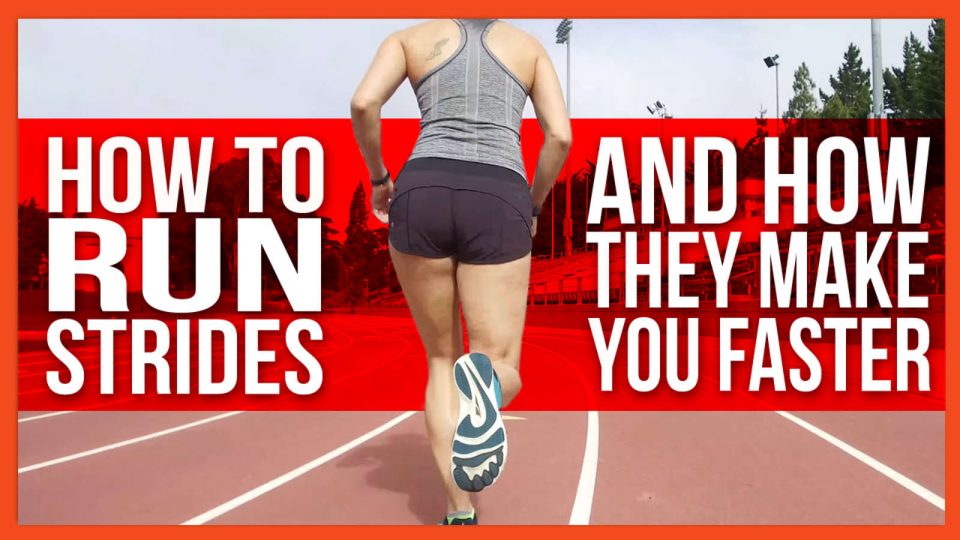
What are strides? Strides are a training tool to help you find your maximum running speed, and to help you perfect your running form. A stride is a short run burst, usually ranging from 50-100 meters, that starts slow and gradually builds to about 90% of your top running speed.

A stride should last for about 10-20 seconds, so adjust your distance accordingly. There is no right or wrong, just make sure your speed is increasing as you go.

An ideal stride is timed so that you are running at that 90% speed for the last 5 seconds of your effort.

At the end, walk or jog back to the start, and repeat 5-10 times.

Where should I run strides?

Because we are looking to exaggerate our form and practice our speed, run your strides on a flat surface.

If you have access to a track, practice your strides there to make sure no obstacles or hills are getting in the way of your practice.

If you do not have access to a track, no worries – a flat, grassy area works well. Any sort of flat, cushioned surface is ideal, as that cushion helps protect our bodies from injuries, which is especially important when we’re training speed work.

When should I do strides?

Try to incorporate strides into your warm-up once or twice per week. If you can, work them in on the same day(s) you are working on speed – before an interval workout, or before a fast, shorter run.

Remember, we want to do about 5-10 repetitions of 50-100m strides before our run. This gets the body accustomed to the form it will need during the run, and it also gets your heart rate up and your blood flowing before your workout.

How do they make you faster?

Because each effort starts slowly and then builds speed from there, strides exaggerate run form. A stride is a focused effort that clearly translates proper run form at a slow speed into proper run form at a high speed.

A proper run form is crucial for injury prevention, but it’s also going to make you faster.

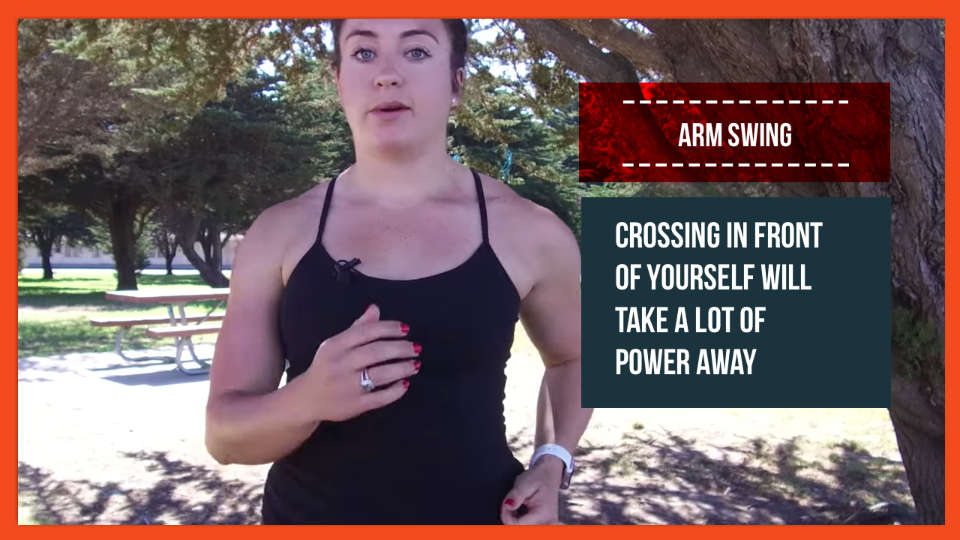
For example, when your arms are swinging across your body’s midline (a “don’t” in running form), that detracts from your forward momentum.
How To Run Strides and How They Make You Faster
Photo Credit: The Run Experience

Form flaws are often the reason runners do not get faster when they train speed. So with strides, we can closely examine our tendencies at a slow speed, fix them, and that carry that proper form right on up to a sprinting pace.

In addition, strides get your body used to speed. I’m sure many of us have tried to go faster while on a run, and it scared us a little. Often times, when we try to go faster, breathing becomes more difficult, or certain muscle groups feel like they’re being strained.

For most runners, this is because your body is simply not used to going fast. As a result, it starts to send you signals to slow down.

Because strides are a gradual increase in pace, and only last for a maximum of 20 seconds, they are the perfect way to introduce speed to our body mid-run. They are like a low-stakes test run for your muscles and respiratory system to get used to the feeling of running faster.

And by the end of your stride, you’ll be going faster than you ever would on a distance run, so there is an element of over-training here that will allow your distance runs to go faster while feeling easier.
How To Run Strides and How They Make You Faster
Photo Credit: The Run Experience

What is a proper run form?

We keep bringing up proper run form, and how strides can exaggerate it, but what does that even mean?

In short, we want our head in a neutral, upright position, our shoulders down and back, and our hips facing forward.

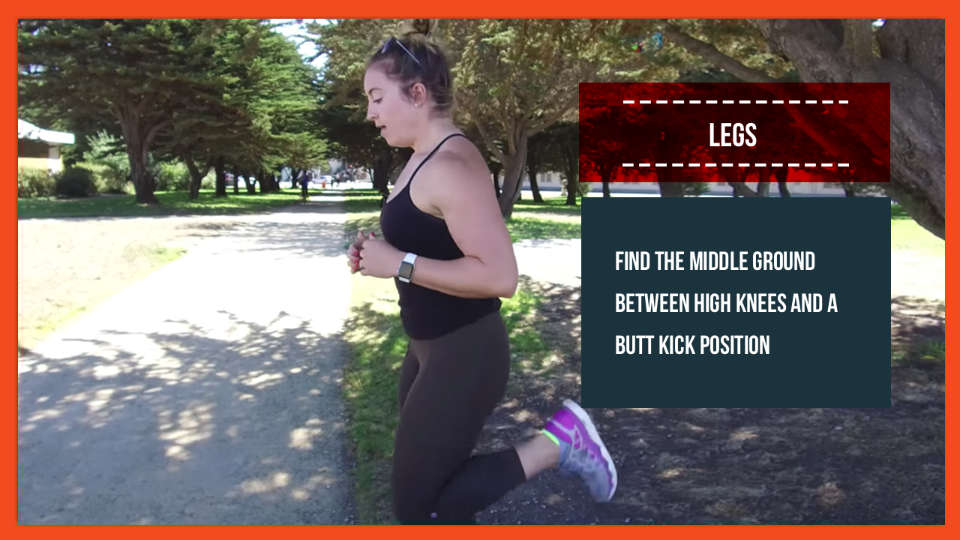
Our foot pick-up should fall right in the middle ground between a high-knee and a butt-kick and we want to pick up our feet relatively quickly (even if that means a shorter stride length) in order to feel lighter while we run. For a more comprehensive look at running form, check out this Head To Toe Beginner Running video.

Coach & Athlete Running Tips
Share. Facebook WhatsApp Twitter Email LinkedIn Pinterest
Holly Martin
Holly Martin
  • Website

Holly Martin is a San Francisco-based running coach and personal trainer. With a 20+ year background in dance, Holly brings a strong focus on technique and mobility to all of her coaching. Currently, she trains clients at Midline Training and Nfinite Strength, and coaches online with The Run Experience, an online training community for running workouts and running training programs. Also read their blog for running tips.

Related Posts

18 Best Mental Strategies & Motivation for Runners

May 26, 2025

The Rise of Social Running: How It Benefits Your Body, Mind, and Career

February 13, 2025

How Athletes Can Loosen Tight Hamstrings with Genetics and Targeted Exercises

January 28, 2025
Add A Comment

Comments are closed.

Subscribe to Updates

Get free access to the latest running event updates, promotions, product announcements and much more!

Race Day Transport Options in Singapore: How to Get to the Start Line

September 18, 2025

7-Eleven Run Singapore 2025: Fitness, Fun, and Community at Marina Barrage

June 17, 2025

Standard Chartered Singapore Marathon 2024: Highlights and Key Takeaways

December 2, 2024

Run For Hope 2024: How Community Spirit Fuels Advancements in Cancer Research

November 19, 2024
RunSociety – Asia's Leading Online Running Magazine
Facebook X (Twitter) Instagram YouTube
  • Home
  • About RunSociety
  • Advertise
  • Contact RunSociety
  • Community Guidelines
  • Ethics Statement
  • Privacy Policy
  • Terms and Policies

With a commitment and pride to quality content for the running community. RunSociety is, and always has been an independent body.

Copyright © 2011 - 2025 RunSociety. All Rights Reserved. Designed & Developed In House.

Type above and press Enter to search. Press Esc to cancel.